

El Acuerdo de Paz de 2016 – The Reading The Mind in the eyes Test For Adults – Isotopic Evidence Of Increased Societal
En nuestro boletín de investigación presenta un análisis sobre el Acuerdo Final de Paz de 2016 con respecto a la niñez; las propiedades psicométricas a partir del test RMET y la sociedad precolombina de Panamá.
Libro de investigación UEC: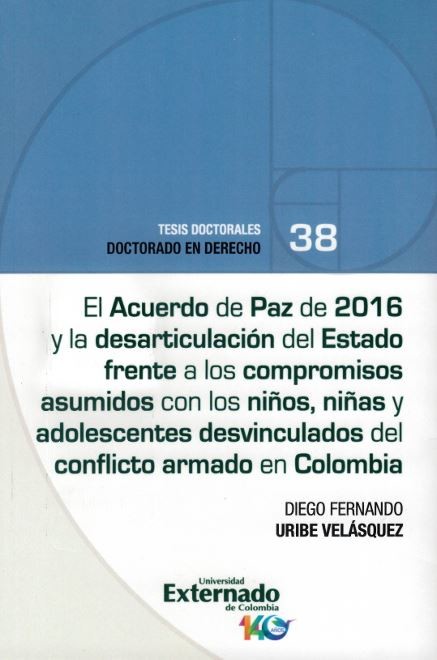
El Acuerdo de Paz de 2016 y la desarticulación del Estado frente a los compromisos asumidos con los niños, niñas y adolescentes desvinculados del conflicto armado en Colombia
Autor: Diego Fernando Uribe Velásquez
Esta investigación es fundamental para comprender los desafíos de la transición hacia la paz en Colombia, centrando su análisis en la respuesta del Estado frente a los compromisos adquiridos en el Acuerdo Final de Paz de 2016 con respecto a la niñez desvinculada del conflicto armado. A través de un riguroso examen normativo y contextual, la obra desentraña la complejidad del restablecimiento de derechos y la reincorporación de niños, niñas y adolescentes, evaluando críticamente instrumentos como el Programa Camino Diferencial de Vida y la articulación institucional entre entidades nacionales e internacionales.
Artículo en revista internacional:
The Reading the Mind in the Eyes Test for adults: A refined version in Spanish
Autores: Juan Carlos Caicedo-Mera; et al.
Revista: Neuropsychology
The Reading of the Mind in the Eyes Test (RMET) is widely used to assess theory of mind, but its validity has recently been questioned. This study aimed to present a refined Spanish version of the test and examine its psychometric properties. A total of 1,185 participants from Colombia completed the Spanish RMET. Exploratory and confirmatory factor analyses were conducted to examine its internal structure.
Artículo en revista internacional:
Isotopic evidence of increased societal diversification in Pre-Columbian Panama
Autores: Diana Carvajal-Contreras; el al.
Revista: Plos One
The Pre-Columbian history of Panama stands in unique contrast to the state-level societies of Mesoamerica to the north and the Andes to the south. Characterized by a network of powerful chiefdoms at the time of the Spanish arrival in the early 16th century, paleoecological and archaeological evidence indicates that the inhabitants of the isthmus had begun practicing horticulture with early domestic plants by 7000 BCE and adopted ceramic technology around 2500 BCE, both of which were earlier than most of the North and Central American continent. The development of the sociocultural sphere of chiefdoms that arose in this region between 200 BCE – 1500 CE is still not well understood.
