

Construyendo el buen vivir – How are heis coping with the prme indicator system – Populist foreign policy
Esta nueva entrega trae unas investigaciones sobre el Derecho agrario, la responsabilidad social universitaria y la política exterior populista.
Libro de investigación UEC:
CONSTRUYENDO EL BUEN VIVIR: un principio para el desarrollo integral de la reforma rural en Colombia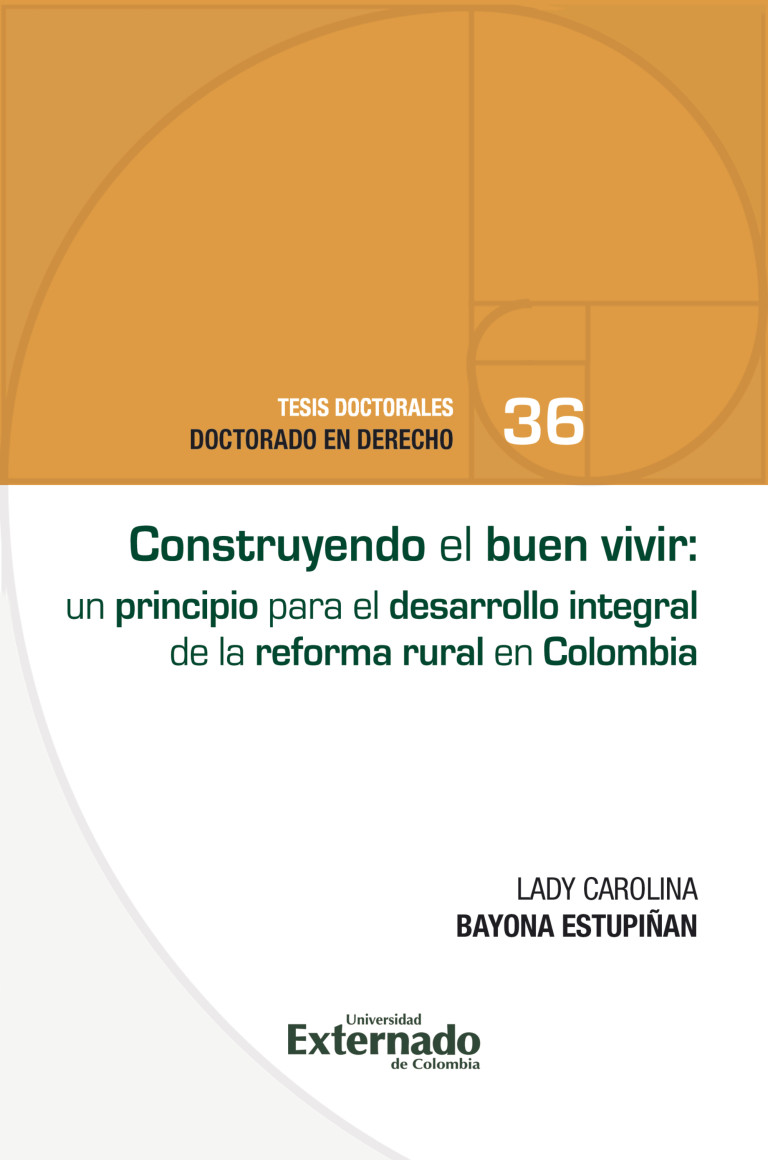
Autora: Lady Carolina Bayona Estupiñan
Este libro propone una mirada transformadora del derecho agrario colombiano, al plantear el buen vivir como un principio jurídico orientador de la Reforma Rural Integral contemplada en el Acuerdo Final de Paz. La tesis combina elementos del derecho, la filosofía política, los estudios rurales y la justicia rural, para articular un enfoque que reconozca al campo como sujeto de transformación y no solo como objeto de políticas públicas.
Artículo en revista internacional:
How Are HEIs Coping With the PRME Indicator System of University Social Responsibility? Evidence From Colombia
Autores: Gustavo Adolfo Yepes-López, José Luis Camarena; et al.
Revista: Higher Education Quarterly
This exploratory research documents the implementation of the PRME Indicator System for University Social Responsibility (PISUSR) in the process of preparing the SIP report of 11 Colombian higher education institutions between 2020 and 2021. The study’s objectives are twofold: first, to validate the precision, balance, clarity, comparability, timeliness, usefulness, comprehensiveness, and reliability of the indicator system; second, to evaluate the relevance and experience perceived by the participants during its implementation.
Artículo en revista internacional:
Populist foreign policy: cases of Argentina, Colombia, Türkiye, and Venezuela
Autor: Rodolfo E. Colalongo
Revista: Southeast European and Black Sea Studies
This article examines the foreign policies of Argentina (Néstor Kirchner), Colombia (Álvaro Uribe Vélez), Türkiye (Recep Tayyip Erdoğan), and Venezuela (Nicolás Maduro) through the analytical framework established by Destradi and Plagemann (2019). It seeks to determine whether these countries’ foreign relations during their respective presidencies were characterized by a) increased bilateral conflict, b) a weakening of global governance and its institutions, and c) the development of more centralized and personalized foreign policies. Additionally, this study introduces a fourth variable – the emergence of new international partnerships – to provide a more comprehensive analysis.
